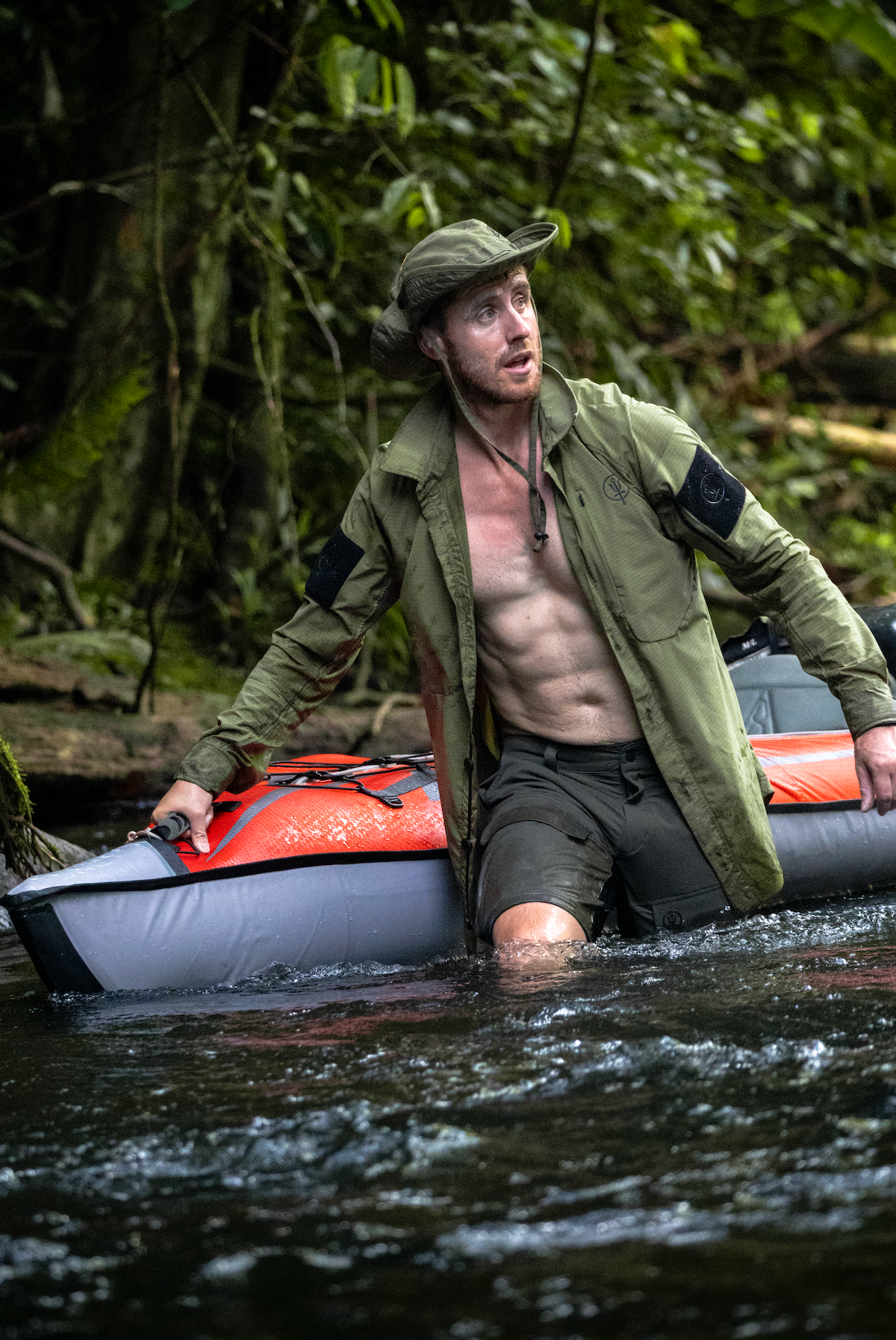
Into the Congo Basin: Why Ash Dykes’ Next Adventure Is Anything but Ordinary
There are some journeys you watch from a distance and think, “That looks incredible.”
And then there are journeys that make you stop and wonder, “But why would anyone willingly do that?”
Ash Dykes’ latest expedition probably falls somewhere between the two.
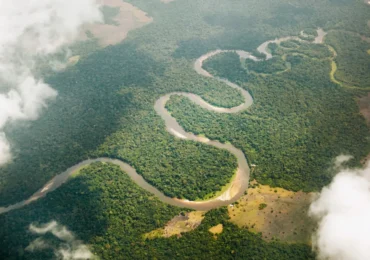
The Welsh explorer and extreme adventurer has now begun the first chapter of Project 6, an ambitious plan to undertake six extreme expeditions across six very different environments over 12 months. His first challenge takes him deep into the Congo Basin, where he plans to travel more than 700 kilometres down the Sangha River, starting in Nola in the Central African Republic and finishing in Mossaka in the Republic of Congo.
And yes, he is doing a large part of it in an inflatable kayak.
That sentence alone sounds almost too simple for what lies ahead.
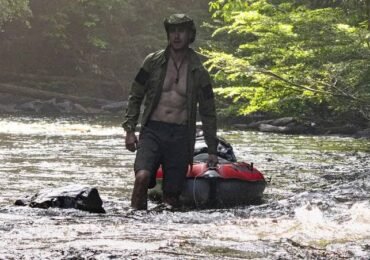
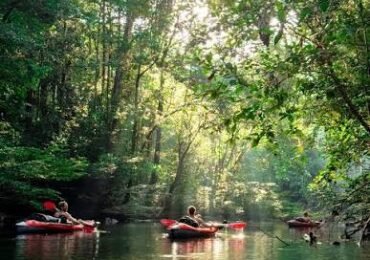
This isn’t Ash’s first encounter with the jungle
What makes this expedition particularly interesting is that Ash isn’t walking into the rain-forest as a complete stranger to this kind of environment.
His previous expeditions have taken him through some seriously unforgiving places.
In 2014, he became the first person to cross Mongolia solo and unsupported, covering around 1,500 miles in 78 days while hauling his own supplies. He later traveled the length of Madagascar, crossing the island’s interior and climbing its eight highest peaks. That expedition brought its own collection of problems, including malaria, military checkpoints, bandits, spider bites and crocodile-infested rivers.
Then came perhaps his most famous expedition: walking the entire length of the Yangtze River in China – around 4,000 miles over 352 days.
And his connection with the rain-forest is even more relevant to what he is doing now.
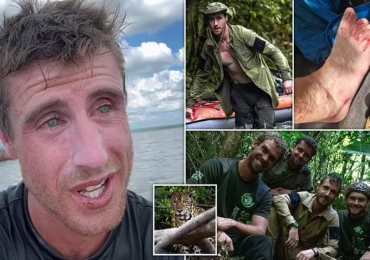
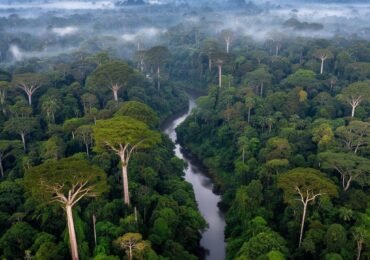
In Suriname, in the Amazon region, Ash and his team traveled through remote rain-forest and attempted to follow the Coppename River from its source to the sea, combining trekking and kayaking. They also climbed in the Surinamese Amazon, where the team encountered one of the jungle’s great surprises: a jaguar photographed from the water.
That experience taught him something important about rain-forest expeditions:
Sometimes the river isn’t simply the route. It is the road, the obstacle and the escape route all at once.
Why an inflatable kayak?
At first, an inflatable kayak sounds like an unusual choice for a river filled with crocodiles, hippos and everything else that lives in the Congo Basin.
But there is actually a very practical reason behind it.
Ash has explained that an inflatable craft gives him the combination of robustness and portability he needs. If the river becomes impossible to navigate, the kayak can be deflated and carried through the forest.
That lesson comes directly from his Amazon experience.
During his Suriname expedition, the team encountered a waterfall roughly 15 metres high. Continuing through it wasn’t an option, so they had to take the kayak out of the equation, carry it and themselves around the obstacle, and continue afterwards.
And that is probably one of the biggest differences between traveling through a normal tourist destination and traveling through a place like the Congo Basin.
You cannot assume the road ahead will still be a road.
Sometimes you have to carry the road with you.
But the wildlife isn’t even the biggest problem
This is where the Congo expedition becomes genuinely serious.
The Congo Basin is the world’s second-largest tropical rain-forest after the Amazon, and the Sangha region is home to an extraordinary range of wildlife.
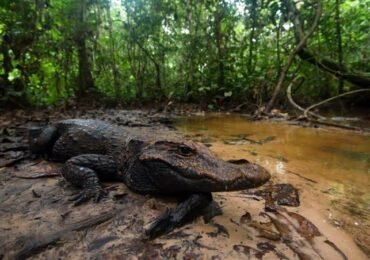
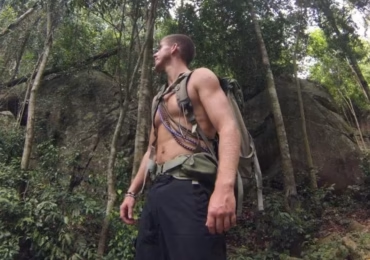
Ash and his team could encounter hippos, crocodiles, forest elephants, snakes, spiders and gorillas along the journey.
Imagine paddling quietly down a forest river and knowing that the water beneath you could contain crocodiles.
Then imagine camping beside that same river at night.
And then remember that the forest itself isn’t empty.
There are elephant paths running through the jungle, and pitching a tent on one of those routes could have disastrous consequences. Ash has specifically spoken about the importance of identifying elephant corridors before making camp because an elephant isn’t going to politely detour around a tent simply because somebody is sleeping inside it.
There is also the Sangha River itself.
Strong currents, exhaustion, heat, humidity and long stretches away from medical help create risks that don’t necessarily make for dramatic social-media footage but can be just as dangerous.
And then there are the diseases.
Malaria. Dengue. Infections. Parasites. Contaminated water.
One particular concern Ash has highlighted is river blindness, or onchocerciasis, which is transmitted through repeated bites from infected blackflies. In severe cases, the disease can affect vision and lead to permanent blindness.
As Ash himself put it, the Congo has a particularly difficult combination:
“The diseases are rife, and the animals are big.”
That might actually be the simplest description of what he is walking into.
There is another side to this adventure
Perhaps the part I find most interesting isn’t actually the kayak.
Before beginning the river journey, Ash plans to spend time learning from the BaAka people, whose communities have generations of knowledge about the rain-forest.
That matters.
Because you can have the best satellite equipment, the most expensive outdoor clothing and years of expedition experience, but there are things about a forest that simply cannot be learned from a map.
- Where animals move.
- How to read the forest.
- Which routes make sense.
- How to find your way when everything looks green.
- What signs to look for before something becomes a problem.
Ash has repeatedly spoken about the importance of learning from people who actually live in these environments. His Congo project places indigenous knowledge alongside exploration, survival and conservation as part of the story he wants to tell.
And honestly, that may be one of the most valuable parts of the expedition.
A month on the river
The plan is to travel roughly 30–40 kilometres a day, camping along the Sangha and carrying food and equipment with them.
This isn’t a luxury expedition.
There won’t be a comfortable lodge waiting at the end of each afternoon.
There won’t be a hot shower because the day’s paddling was exhausting.
There won’t necessarily be another person nearby if something goes wrong.
The team is preparing with satellite communication, medical supplies, evacuation arrangements and other safety measures because some sections of the journey can leave them days away from proper medical help.
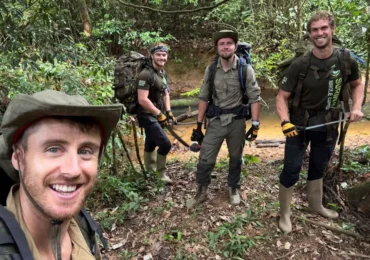
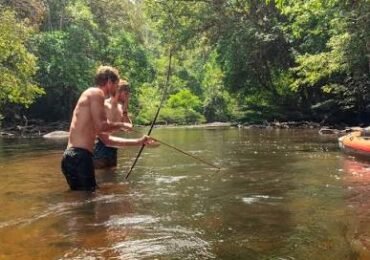
And their food situation is equally interesting. Rather than relying on catching fish or hunting, the team plans to carry ration packs and boil water for their meals. Ash has estimated that they could burn around 7,000 calories a day, while their food intake may be considerably lower.
That means the real challenge isn’t simply paddling.
It’s keeping your body functioning while you’re constantly asking it to perform.
Why would anyone do this?
That’s probably the question most of us would ask.
Why leave a comfortable life and deliberately put yourself in an environment where crocodiles, hippos, parasites, disease, heat, exhaustion and isolation are all possible?
For Ash, adventure has never simply been about ticking places off a map.
His earlier journeys grew from a desire to experience places differently and push himself beyond conventional travel. Over the years, those adventures have turned into world records, documentaries and stories reaching millions of people.
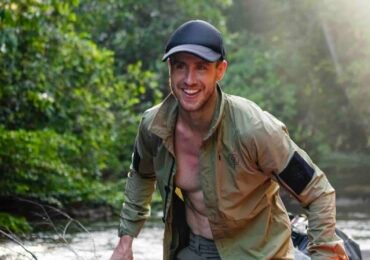
And with Project 6, there is another layer.
He wants to document not only the physical challenge but also the people, wildlife, local knowledge and environmental pressures surrounding these places.
That makes the Congo expedition more than “a British guy kayaking down a dangerous river.”
At least, it should.
It is an opportunity to show people a part of Central Africa that most will never see for themselves.
And this is the part that makes me curious
As someone who follows African tourism, I find adventures like this fascinating because they remind us how little of Africa most people actually experience.
When people hear Congo Basin, they may immediately think of danger, remoteness and political instability.
But beneath all of that is one of the planet’s most extraordinary landscapes – immense rain-forest, rivers, forest elephants, gorillas and communities whose relationship with the forest stretches back generations.
Ash Dykes is choosing to enter that world in one of the most physically demanding ways possible: by river, in an inflatable kayak, carrying what he needs and learning from people who know the forest better than any map ever could.
And that is why I’ll be watching.
Not simply to see whether he reaches Mossaka.
But to see what the Congo reveals along the way.
Because the most fascinating journeys aren’t always about conquering a destination.
Sometimes they’re about being humble enough to enter a place you don’t completely understand and paying attention.
Ash Dykes’ Congo mission is scheduled as Mission 01 of Project 6, a planned series of six expeditions across 12 months. The Congo leg is the first: more than 700 kilometres down the Sangha, from Nola to Mossaka, through one of the world’s last great wildernesses.
And somehow, an inflatable kayak is going to be his vehicle through it all.
I have a feeling this is going to be one hell of a story.